From idea to app in an afternoon
Every owner has a list of "it would be great if…" ideas they gave up on because they cost too much. Dust that list off: the price has changed.

By MatthewTechnology & Strategy
3 min read · 678 words

Think of the job you’d happily never do by hand again, and the better way you’ve pictured doing it. You were right about it. You’ve probably known for years how it should work. It just cost too much to build. That’s changed, and there’s no longer a good reason to keep doing it the old way.
Maybe it’s the orders someone copies from emails into a spreadsheet every morning, and you hope they got every number right. Maybe it’s the checklist you carry in your head for every estimate, or for every job, which nobody else can follow the way you do.
Take this one, for example
A small chili cook-off in Texas needed a way to judge its entries. We built them an app in one afternoon: 5 hours from the first idea to finished and ready to use. It cost under $500.
That might sound like a simple online form. It isn’t. The judges aren’t known until the day of the event, so nobody signs up ahead of time. The organizer taps a button, and each new judge gets a QR code to scan, or a 6-digit PIN to type in, and starts scoring on their phone. Each phone lists the chilis in a different order, so no entry is always tasted first.
Before a judge submits, the app helps them check their own scoring. If they haven’t given anything above a 7, it points that out. If two chilis are tied on their ballot, it shows them, so they can decide which they really preferred.
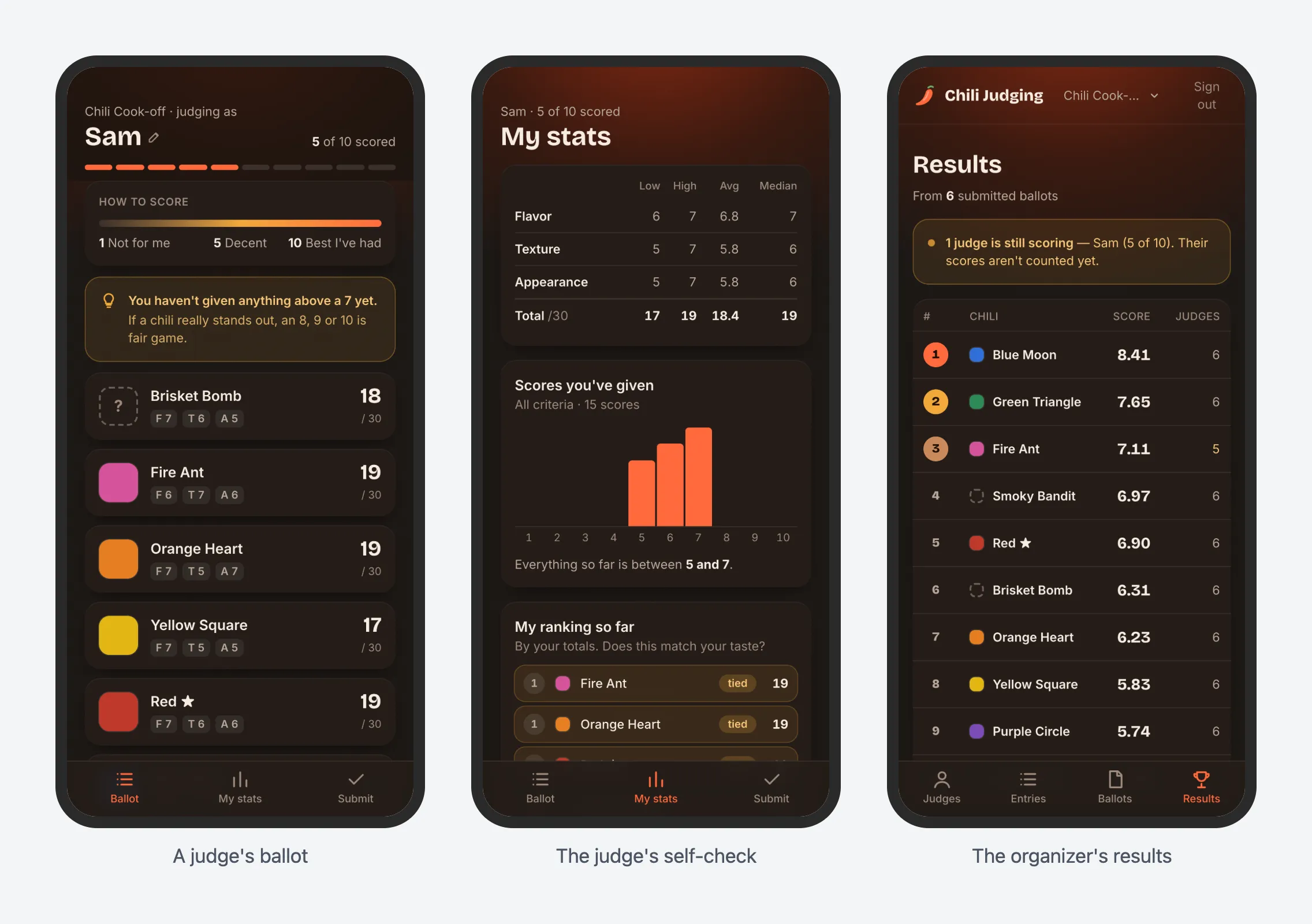
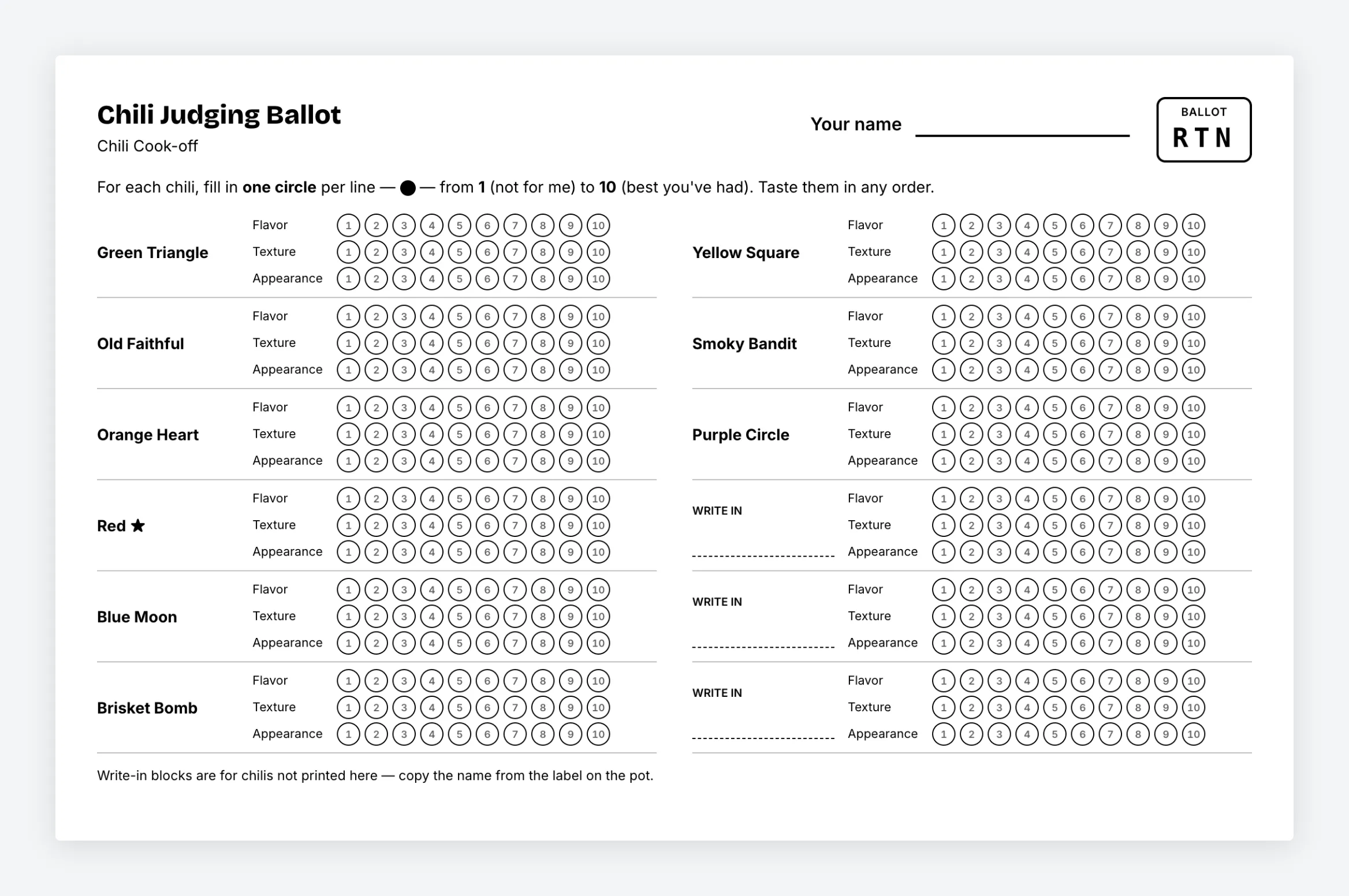
Not every judge has a phone, so the app also prints paper ballots, each with its own code in the corner. The organizer types those in afterwards, on their phone, and they count exactly like the others.
The organizer runs everything from their phone: adding entries as they arrive, handing out PINs, typing in paper ballots, adjusting how much flavor counts against texture and appearance, and watching the results come in.
A few years ago, a week of work would only have bought a first version of this to try out. Then would come the rounds of testing and fixing.
What changed
The slow part of building software was never getting something to work. It was the finishing.
Think of a renovation. The framing goes up in a day. The drywall, the trim, the paint, and fixing what the inspector flags are what take the weeks. Software is the same. A developer could get a rough version running fairly quickly. Most of the time went into what came after: the situations nobody thought of at first, making every screen easy to use, fixing what testing turned up, and having another developer review the work. That meant rounds of back and forth, often with more than one person.
AI changed that. We use it to write the code, and it does that finishing work on the first pass. Reviewing the work no longer waits on a second person, either: several AI reviewers can check it at the same time, in minutes. The review still happens. It just doesn’t take days anymore.
So if you were quoted a price for your idea a few years ago, that quote was based on the old way of working. It’s out of date.
What this means for you
Go back to that job you’d happily never do by hand again. Maybe it’s the one you put off until Friday afternoon, which then takes the whole evening. Maybe it’s the small mistakes in the middle: a 7 that looks like a 1, a line skipped when copying an order, a step the new person didn’t know about.
The system you’ve been imagining isn’t a fantasy anymore. You were right that it would save you hours. Now it can cost less than the hours it saves.
Not every idea will come in under $500. Yours will cost what it needs to. But the bar for “worth building” is far lower than it used to be, and the only way to know where yours lands is to ask.
Get new articles by email
One email when a new article goes up, and nothing else. Unsubscribe any time.